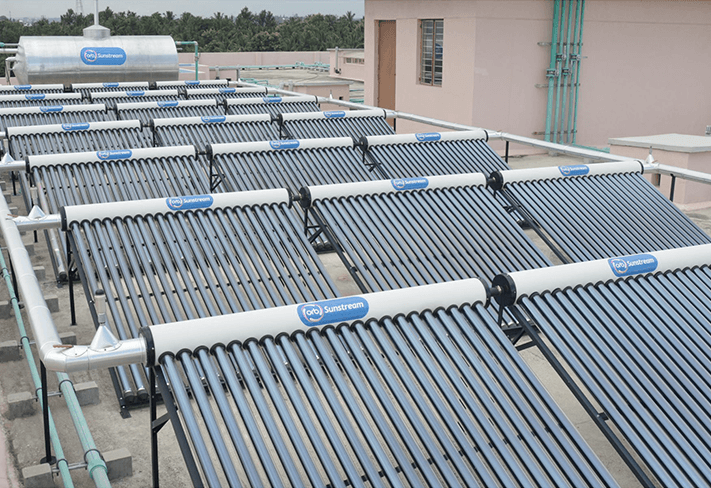
Solar Water Heater - What You'll need To understand
Generally, there are two different kinds of solar water heaters. The initial is really a stand alone heater that provides all the hot water for your home. The second is made use of as a pre-heater to heat the water coming into your current water heater. The principle difference inside the two forms is the fact that a stand alone heater will ordinarily possess a reservoir to retailer the heated water along with the pre-heater utilizes the current water heater as a reservoir.
The part of a solar water heater exactly where the water is actually heated by the sun is named a heat exchanger. The heat exchanger is definitely the key element on the heater and there are lots of distinct designs in use around the world currently.
A stand alone solar water heater consists of a storage tank to shop the heated water, the heat exchanger, and also the hoses or tubing to connect them. In some applications a 1 way valve is installed into the method to prevent the back flow of cold water in to the tank, and some systems use a tiny pump to achieve this and make certain circulation by way of the heat exchanger.
When a system is often set up correctly, no pump is necessary to accomplish circulation through your heat exchanger as all-natural convective current will do it totally free (given that hot water is lighter than cold water and can often rise to the major pulling cold water in to the bottom since it does), even so, if your distinct application is such that the heat exchange unit cannot be set on the exact same level as the storage tank (on account of space for the tank and an suitable spot with offered sunlight for the heat exchange unit), you could must use a smaller pump to ensure circulation by way of your system. For any really off grid system, you could use a tiny 12 volt pump and energy it using a solar panel. No battery is necessary since the solar heater only operates when sunlight is out there just just like the solar panel.
The pre-heater type is tied in to the cold water supply line to your existing water heater. The way it performs is always to pre-heat the water coming into your heater so it will not need to operate as tough as normal and from time to time, not at all. Water that is definitely currently hot doesn't have to have as considerably heating, sometimes none at all. This is a fantastic method to save around the portion of the power bill that's utilised to supply hot water for your household even though leaving your existing water heater inside the method to make sure a provide of hot water on cloudy days or other circumstances exactly where your solar water heater does not operate as well.
This kind of solar water heater consists of a heat exchange unit, the lines connecting it for the cold water provide as well as your water heater. A pump isn't essential right here since the stress of your incoming water will achieve the circulation by means of the heat exchanger.
These units work in particular nicely within the summertime but provision needs to be made to safeguard the outdoors parts from damage resulting from freezing in the winter. Ordinarily the heat exchanger and lines going to and in the property would be the only outdoors parts and can be drained.
These are the two basic varieties of solar water heaters in use around the globe, currently. They could be as uncomplicated in design and style as a garden hose lying inside the sun, or as complicated as you wish to make it with copper or PVC tubing in a sealed box and temperature activated a single way valves and pumps. That may be up to you to make a decision for oneself. In my own opinion, fewer moving parts means less can go wrong with it for me to repair typically when my time is already committed to some other vital project, like becoming around the lake trying to catch Mr. Bass.
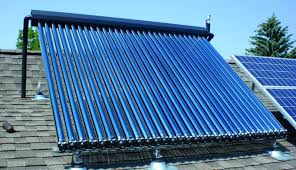
How Solar Water Heaters Work
Solar water heating, otherwise known as SWH, is water turned hot by solar energy acquired from sunlight for industrial, industrial or residential activities. Solar water heating systems are comprised of a water storage tank, heat transfer fluid (HTF), and solar thermal collectors.
How SWH function:
Solar hot water devices are accessible in two versions: active (pumped) or passive (compact). The solar collector, fitted on a wall facing the sun or possibly a roof, warms up the liquid that is definitely then circulated via an active SWH or propelled by convection in a passive method. Collectors are composed of an insulated box with a glass cover having a black painted, solar metal absorber that's flat and fastened towards the copper pipes, or a number of metal tubes enclosed by a near vacuum (evacuated) cylinder of glass. Heat is stored in an cushioned water storage tank with an inlet and outlet attached to and out of the collector. Passive or active household solar water heaters comprise of a secondary energy-source (electrical energy or gas) activated on sunless days to assure a steady hot water provide once tank water plummets below a specific temperature, normally of fifty five Celsius.
Active solar hot water devices:
Active solar water heaters employ a pump to distribute water or heat transfer fluid amid the collector and cistern. Available in two kinds - direct non passive appliances provide water towards the collector then to the tank whereas indirect non passive appliances circulate HTF via the solar thermal collector and also a heat exchanger. The warmth created is transported to the tank water.
Passive solar water heaters:
Integrated Collector Storage (ICS or batch heaters) devices are composed of thin rectilinear, glass tanks fixed on walls facing the sun or roofs. Water tanks serve as storage and collectors. Water delivery is contingent with gravity flow. Batch heaters are effective, effortless and hugely befitting in warm climates.
Convection Heat Storage systems, also referred to as CHS or thermosiphon, are either plate type or evacuated tube collectors with integral padded water tanks. CHS devices avail of convection to bring water contained inside the collector towards the cistern. A lot more useful than ICS as the solar thermal collector heats a smaller volume of water steadily fed to the water storage tank. CHS devices are installed in regions with not as significantly sunshine than ICS.
Direct passive solar water heaters draw water out with the residential water availability to circulate amongst the collector and storage tank. As quickly as water heats up, convection triggers it to ascent and flow towards the storage tank. These solar hot water devices usually are not suited to cold climate as water inside the solar thermal collector can ice up and harm the paneling. Indirect non active solar hot water devices make use of non-toxic, non freezing heat transfer fluid in the collector. As quickly as this fluid is heated, convection triggers it to flow towards the storage tank where a non active heat exchanger carries the heat for the tank water.
Whereas the maintenance of inactive solar hot water devices is low cost and effortless, non-passive appliances are considerably extra valuable at heating and retaining hot water. Non passive water heating systems are a lot more costly and much more difficult to repair in.
Solar Collectors:
Collectors gather and contain sun heat. Three sorts of solar collectors are applied in household water heating systems:
Batch heaters
The tank is situated inside a box with a glass lid and insulated walls. The glass leading permits sun heat get towards the storage tank, and the insulated sides reduce heat wastage from the water storage tank back to the atmosphere. The box also accommodates a mirror like surface that gives back warmth back for the tank.
Flat Plate solar thermal collectors
A two-dimensional case surrounding a network of piping, with a grand glass top rated that faces the sun.
Evacuated tube collectors
As vacuity closes up heat wastage, water lines in an evacuated tube solar collector are enclosed by two concentric tubes of heat-resistant glass that make a vacuum to admit and hold warmth inside the solar collector pipes.
Flat plate solar collectors are normally far more beneficial than evacuated tube collectors in sunny spells. Nevertheless, the power yield of two-dimensional plate collectors decline quickly on cloudy days in contrast to the yield of evacuated tube solar collectors that falls much less quickly.
Preservation:
Assembly of solar water heating systems will depend on:
-Hot water temperature needed by the device
-Variations in surrounding air temperature within the time between day-night cycles